Custom scarves for sports and brand programs
Custom Scarves for Teams, Clubs, Brands and Events
FANSSCARF manufactures made-to-order scarves for teams, clubs, retailers, event organizers and brand buyers that need controlled artwork, sample approval, repeatable production, QC and export-ready packing.
Football Scarf Supplier and Wholesale Sourcing Paths
Buyers searching football scarf maker, football scarf suppliers, football scarves wholesale or football club scarves usually need one of these production paths before comparing price.
Commercial Search Intent Routing
These pages are the preferred landing paths for supplier, wholesale, maker, low-MOQ and team-scarf queries so homepage and product-page traffic can move into clearer commercial pages.
How B2B Buyers Should Think About Custom Scarves
A professional scarf quote starts by separating product use, artwork complexity, commercial channel and delivery risk.
Most buyers are not ready to send a perfect RFQ when they first land on a scarf supplier page. They are checking whether the supplier understands artwork, quantity, construction, labels, packaging and delivery timing without forcing every inquiry into the same product.
For football-specific commercial intent, buyers should move from this broad custom scarves page to the dedicated football pages. Use football scarf suppliers when comparing factories, maker capability, MOQ, sampling and QC. Use football scarves wholesale when the order is a bulk club, fan shop, distributor or supporter group program.
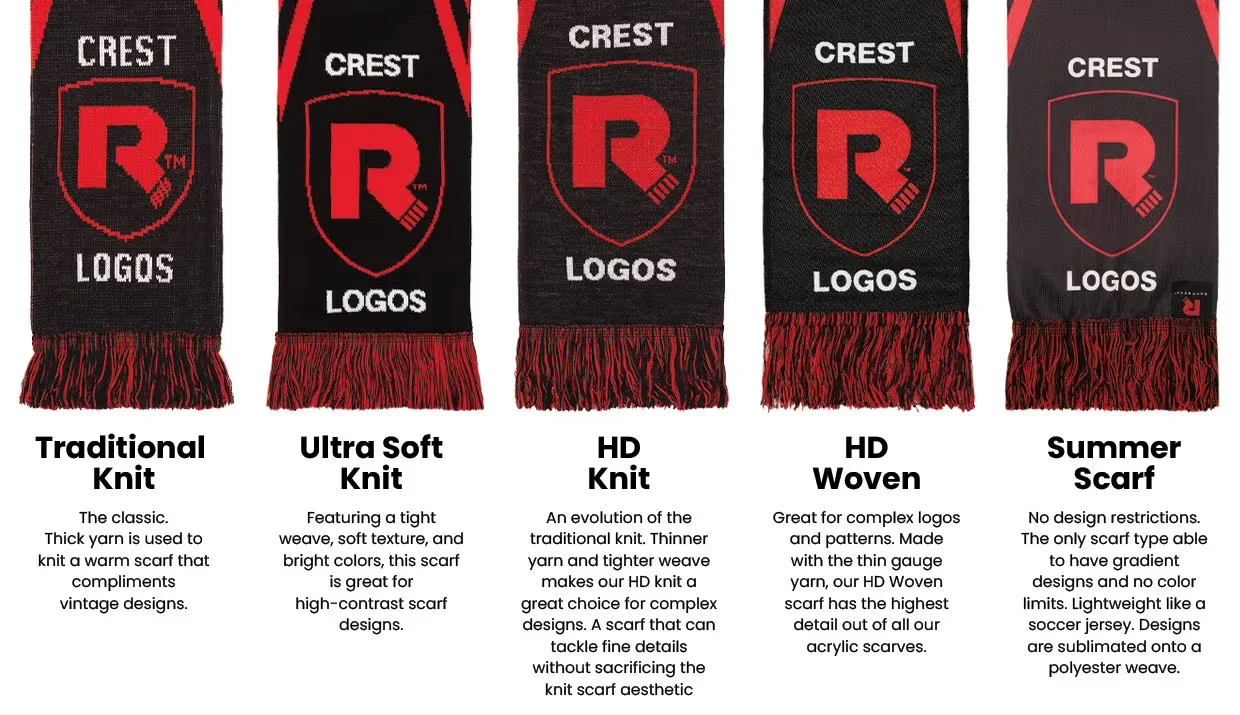
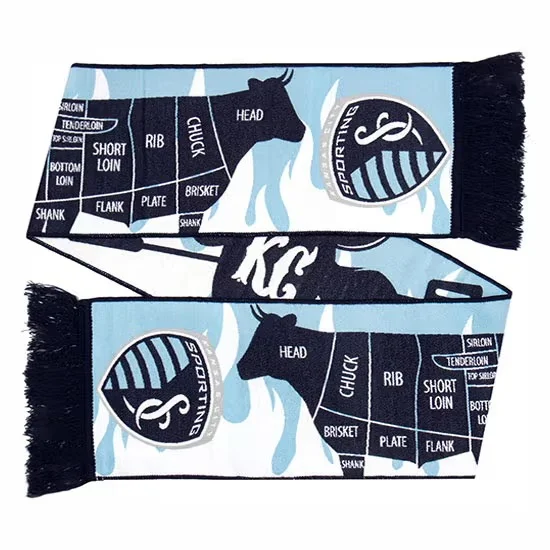
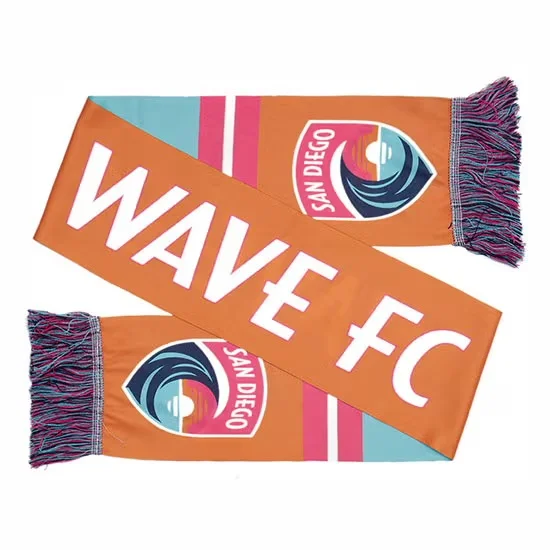
For fan merchandise, the first decision is usually construction. Jacquard and knitted scarves are strong for club names, stripes, bold crests and supporter slogans. Printed production is better when the design includes photos, gradients, detailed sponsor artwork or event graphics. Brand programs may also need woven labels, printed labels or patch branding depending on presentation and durability requirements.
Buyers comparing custom knit scarf, custom knit scarves or knitted football scarf options should use a construction-specific quote path. Knit and jacquard production are strongest when the artwork uses bold names, bar scarf layouts, clean color blocks and simplified crests rather than photo-style details.
MOQ questions should be handled honestly. Small-test requests are common, but factory production still has setup time, yarn planning, proofing and packing work. FANSSCARF is strongest for wholesale and repeat programs, with smaller trials reviewed only when the design is simple enough to make sense.
The strongest custom scarf RFQ includes the use case, artwork file, target quantity, size, color references, deadline and destination. When those details are missing, the supplier can only give a rough range. When they are clear, the quote can cover unit price, sample plan, packaging, freight direction and QC checkpoints before production begins.
For business buyers, the commercial risk is usually not only the scarf cost. A late sample approval can miss a tournament date, weak packaging can create resale problems, and unclear artwork ownership can slow every reorder. A better page should therefore help the buyer prepare a production brief, not simply push them into a quote form. The brief should define the buyer channel, the scarf method, the artwork source, the approval owner and the delivery deadline.
Repeat programs should be treated differently from one-time event runs. A repeat retail scarf needs stable color references, retained artwork files, consistent carton marks and a record of approved labels. An event scarf may prioritize speed, simple packing and a design that can be approved quickly. Separating those scenarios early helps the supplier protect both unit cost and delivery reliability.
The first supplier conversation should clarify the buyer role. A club shop manager usually cares about retail presentation, reorder stability and sponsor approval. A tournament buyer usually cares about a fixed event date and simple distribution. A brand buyer may care about color accuracy, label position and whether the scarf can sit beside other merchandise without looking like a low-grade giveaway. When the buyer role is clear, the supplier can recommend a production path that fits the commercial use instead of forcing the same scarf specification on every inquiry.
A useful scarf supplier should also explain trade-offs before quoting. Jacquard and knitted scarves can create a strong classic supporter feel, but they have limits when the artwork includes small outlines, gradients or photographic details. Printed scarves can carry complex artwork, but the buyer needs to approve image resolution, color tolerance and edge placement carefully. Label and packaging choices can make the order look more retail-ready, but they add setup work and require final approval before production. These trade-offs are normal; the problem is when they are discovered after the buyer has already committed to a launch date.
Sampling should be treated as a business control point, not a decorative extra. For first-time buyers, the sample or pre-production proof confirms whether the scarf method, artwork size, colors, fringe and label placement match the intended selling channel. For repeat buyers, the approved sample becomes the reference for future orders. A sample delay can feel frustrating, but it is usually cheaper than correcting a full production run after the wrong logo size, thread color or packing instruction has been used.
Packaging deserves early attention because it affects both buyer experience and warehouse handling. A scarf for a club shop may need a hang tag, barcode sticker and individual polybag. A scarf for a stadium giveaway may only need bulk packing by carton. A distributor may need carton marks, SKU separation and consistent packing counts. These are not small afterthoughts. If they are added after production planning, they can change cost, timing and inspection requirements.
Quality control should match the risk of the order. Basic checks include scarf size, edge finish, fringe strength, color consistency, logo readability, loose yarns, print clarity, label position and packed quantity. For retail or repeat programs, the supplier should also compare production against approved artwork and packing records. This is how a buyer protects brand reputation after the scarves leave the factory and enter shops, events or supporter sales channels.
A buyer should leave this page knowing what to prepare before contacting the factory. The goal is not to fill an RFQ form quickly; it is to send enough information for a useful response. Quantity, artwork, scarf purpose, preferred method, packaging, delivery country and deadline give the supplier the context needed to recommend a practical route. That saves time for both sides and gives the buyer a cleaner basis for internal approval.
Executive Summary for B2B Buyers
Use this summary when comparing suppliers or preparing an internal sourcing brief.
A custom scarf order is a made-to-specification program where the buyer controls artwork, colors, logo placement, size, fringe, label and packaging. For FANSSCARF, the strongest fit is wholesale sports and fan merchandise for teams, clubs, retailers and event buyers.
The right production method depends on the design. Use jacquard or knitted construction for bold team names, stripes and classic supporter scarves. Use printed scarf production when the artwork includes pictures, gradients, small sponsor marks or full-color graphics. Use labels, hang tags and custom packaging when the order needs retail presentation or distributor handling.
Before asking for final pricing, buyers should prepare quantity, scarf dimensions, artwork files, color references, packaging scope, destination and deadline. These inputs are more useful than asking only for a low unit price because they let the supplier check method, MOQ, sample needs, QC scope and shipping risk together.
A strong supplier conversation should also cover what happens after the first order. If the scarf is intended for club shops, online resale or distributor programs, the buyer should ask how artwork records, packaging notes and approved samples are retained for future production. This is the difference between a one-time custom order and a managed wholesale scarf program.
The safest order flow is brief, proof, sample or pre-production approval, bulk production, inspection and export packing. Each step should have a clear owner. The buyer approves artwork and commercial requirements; the supplier confirms manufacturability, schedule and packing control. When both sides treat the project as a managed production program, the result is easier to quote, easier to inspect and easier to reorder.
For buyers comparing several suppliers, the strongest signal is not only the lowest offer. Look for clear questions about artwork, method, quantity, packaging, deadline and destination. A supplier that asks those questions early is usually trying to reduce production risk. A supplier that quotes immediately without understanding the scarf use case may look fast, but the quote may change once the real specification appears.
The purpose of this page is to make that preparation easier. A buyer can compare football, soccer, printed and logo scarf routes, then send a brief that reflects the real business use. That is more useful than a product page that only repeats scarf keywords without explaining what must be decided before production.
Custom Scarf Programs We Support
Buyers arrive with different projects: a team scarf, a retail run, a picture-based design or a branded giveaway. The first job is to choose the right production route.
Sports and Fan Scarves
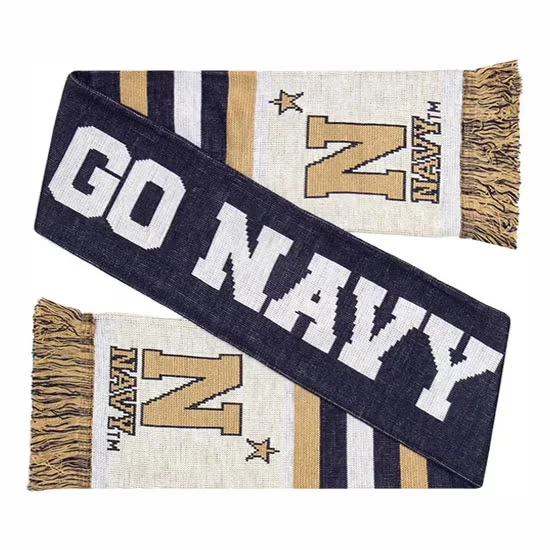
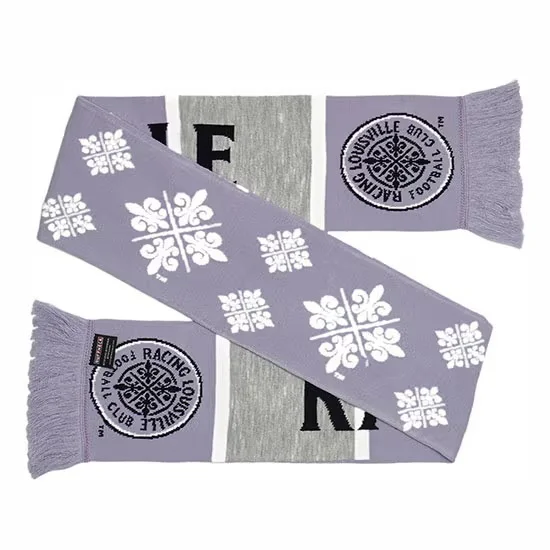
For clubs, supporter groups and event teams that need colors, slogans, crest placement and repeatable bulk production.
Printed and Picture Scarves
For artwork with photos, gradients, mascots or sponsor graphics that need more detail than yarn can hold.
Logo and Wholesale Scarves
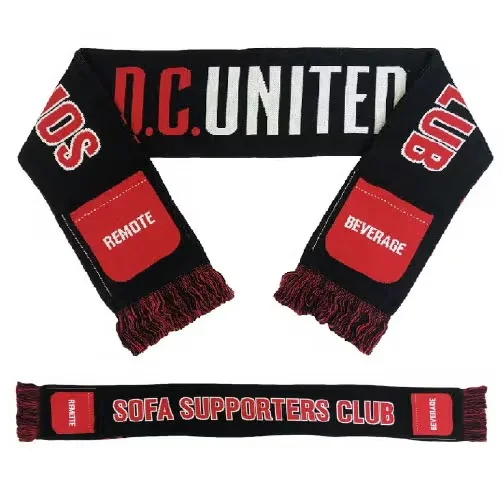
For brand, retail and private label programs where labels, tags, polybags and carton marks matter as much as the scarf.
Choose the Right Production Route
A scarf program should be quoted from the buyer goal, not from a generic product name. These routes help separate club merchandise, soccer programs, printed artwork and brand-logo projects.
How to Prepare a Custom Scarves RFQ
A clear RFQ prevents wrong method selection and quote gaps. For custom scarves, the method, artwork and packaging should be decided early.
- Choose the scarf use case Tell us whether the order is for football, soccer, sports, promotional, retail or private label use.
- Send artwork and target finish Share logo, picture, pattern, scarf size, colors, fringe, label and packaging expectations.
- Confirm method and MOQ We match the design to jacquard, knitted, woven, printed or label branding and confirm MOQ pressure.
- Approve proof before production Production starts after artwork proof, sample or pre-production approval and final packing requirements.
Specification Checklist for a Reliable Quote
These specification points help buyers move from a rough idea to an accurate wholesale quote.
Supporter scarf, team scarf, sports scarf, printed artwork scarf, logo scarf, silk-look promotional scarf or private label retail scarf.
Jacquard, knitted, woven, printed, embroidered patch, woven label or care label depending on artwork detail and final use.
Length, width, fringe color, edge finish, reverse side, yarn weight, material hand feel and seasonal use.
Standard bulk MOQ is 500pcs. Trial quantities depend on artwork, material availability, labels and packaging scope.
Individual polybag, hang tag, barcode, care label, custom insert, carton mark and retail or event packing requirements.
Check logo clarity, color consistency, size, fringe, loose yarns, print sharpness, label position and carton count before shipment.
How to Choose the Right Custom Scarf Path
Use this guide when the buyer has not yet chosen a scarf method or commercial route.
Buying Questions This Page Answers
The page starts broad, then helps buyers narrow the project before sending artwork.
Wholesale ordering
Bulk buyers usually need price tiers, repeat production records, packaging details and reliable QC rather than one-piece personalization.
Picture-based artwork
Photo or mascot designs need print suitability checks, resolution review and edge placement proofing before bulk production.
Logo method choice
Brand and club buyers need a method recommendation because woven, knitted and printed marks each have different detail limits and cost behavior.
Regional wording
US buyers often say soccer scarf, while many international buyers say football scarf. The product can be similar, but the sales language should be clear.
Custom Scarves FAQ
These broad custom scarf questions help buyers choose the right quote path.
What types of custom scarves do you manufacture?
We focus on wholesale team, supporter, printed-artwork, logo and event scarf programs for clubs, retailers and brand buyers.
Do you support custom scarves wholesale?
Yes. Wholesale orders can include artwork proofing, labels, polybags, barcode stickers, carton marks and repeat-order records.
Can you make custom scarf with picture designs?
Yes, picture or photo-style designs are usually better suited to printed scarf production. Send the image and we will check resolution and print suitability.
Can you review small trial requests for printed or silk-look scarves?
Our core production is wholesale sports and fan scarves. Small trial requests can be reviewed when the design and material setup are simple, but we will advise honestly if the project is better suited to a retail print-on-demand supplier.
What is the MOQ for custom scarves?
Our standard bulk MOQ is 500pcs. Smaller trials may be reviewed when artwork and production setup are simple.
Can you make custom scarves for both football and soccer buyers?
Yes. We support both football scarf and soccer scarf wording because buyers in different markets use different terms for similar supporter merchandise.
Can you help choose between knitted and printed scarves?
Yes. We compare logo detail, color count, hand feel, order quantity and deadline before recommending knitted, jacquard, woven or printed production.
Do you support packaging for custom scarves wholesale?
Yes. We can support polybags, labels, hang tags, barcode stickers, carton marks and other resale or event packing requirements.
Related Custom Scarf Pages
Compare the scarf program that best matches your buyer intent before sending artwork.