How to Design Custom Football Scarves for Club Orders
Buyer Decision Summary
To design custom football scarves for a B2B order, start with the use case, choose the scarf construction, simplify artwork for the chosen method, define colors and size, decide labels and packing, then approve a sample before bulk production. Good design is not only visual; it must be manufacturable, readable and repeatable.
Designing custom football scarves is not the same as arranging a graphic on a rectangle. A club scarf must look good in supporters hands, photograph clearly in a stadium, survive retail handling, match club identity and still be practical for bulk production. The best designs start with the final use case and then work backward through construction, artwork limits, color control, labels, packing and sample approval.
This guide is written for B2B buyers planning custom football scarves for clubs, fan shops, supporter groups, sponsors, events and distributors. It focuses on decisions that affect manufacturing quality, not only visual style.
Start with the use case
The first design question is not color or logo. It is use case. A scarf for a club shop has different priorities from a scarf handed out before a match. A retail scarf needs presentation, label accuracy and repeatability. A supporter group scarf needs strong identity and good value. A sponsor-funded scarf needs brand visibility without making the product feel like an advertisement. A distributor program needs clean SKU separation and carton control.
Once the use case is clear, design decisions become easier. A long-term club shop scarf should be evergreen enough to sell after one season. A derby scarf or cup final scarf can include dates, fixture text and commemorative details. A sponsor campaign may need a clean hierarchy: club identity first, sponsor message second, event text third. If every element fights for attention, the scarf becomes hard to read.
For B2B buyers, the design brief should identify the owner of each approval. Who approves the crest? Who approves sponsor placement? Who approves colors? Who approves retail labels? When those roles are unclear, the supplier may prepare artwork that later needs to be rebuilt, costing time before sampling.
Choose construction before final artwork
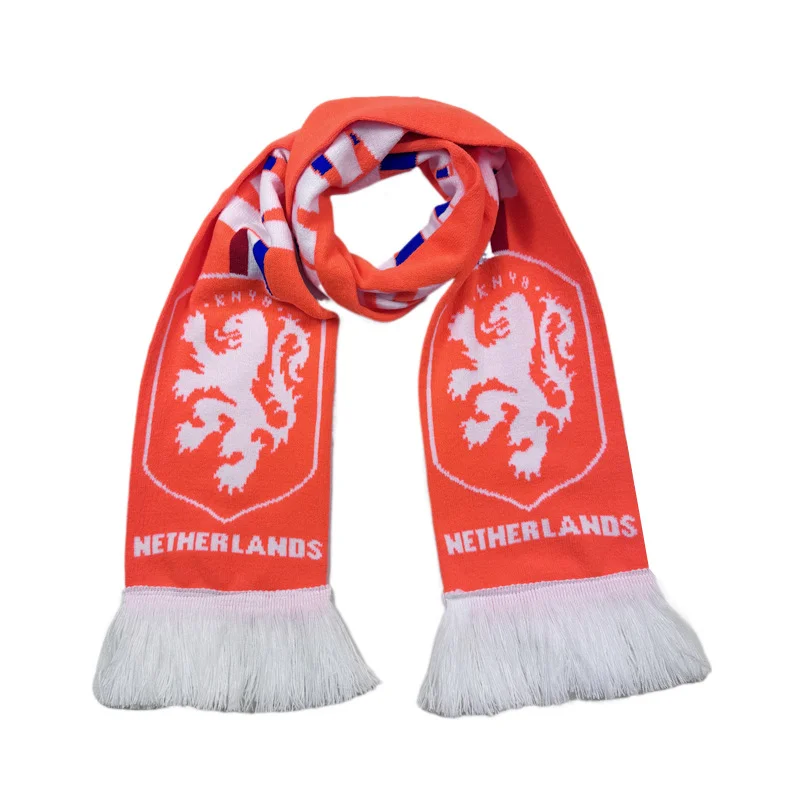
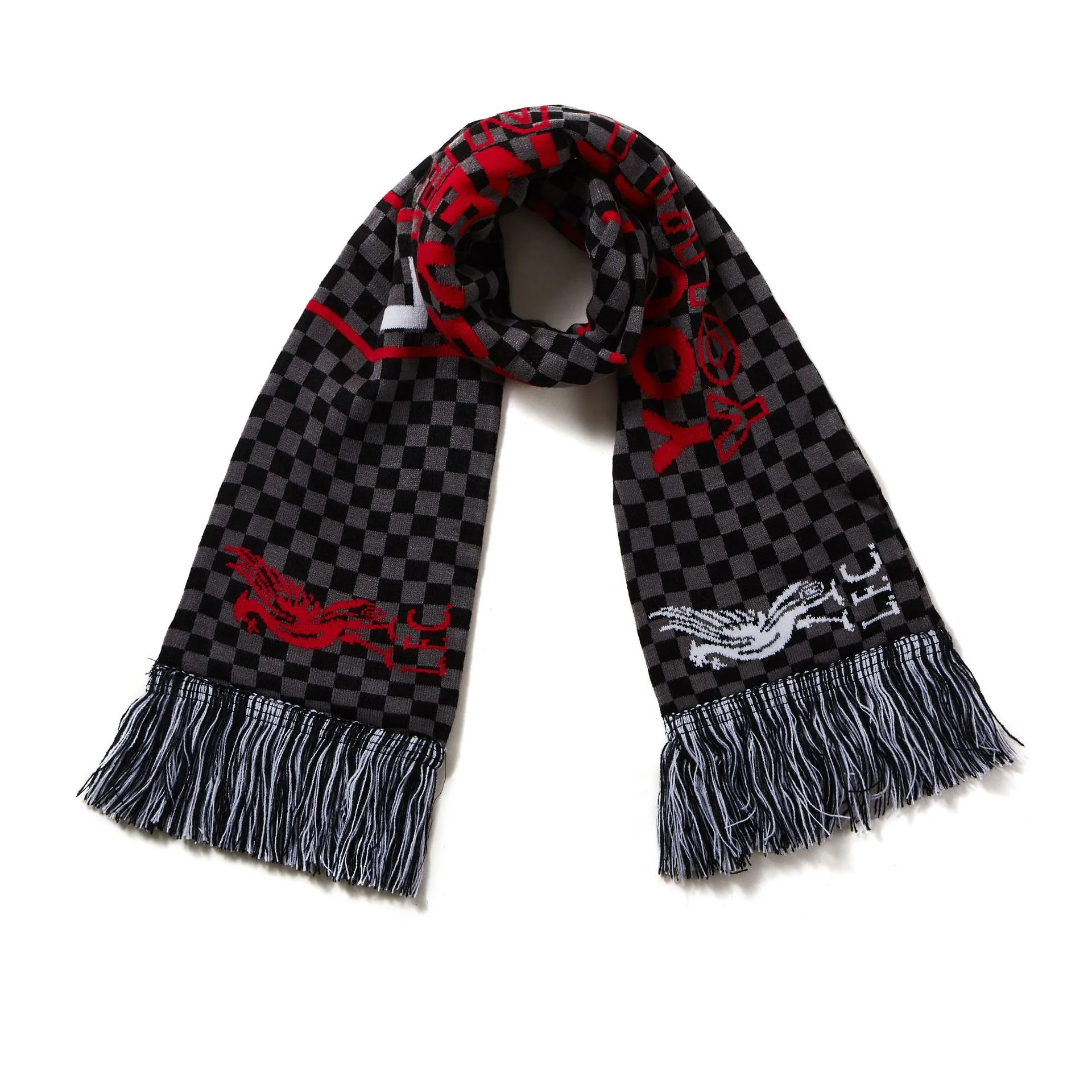
Construction controls what the design can become. Jacquard and knitted scarves are strong for classic club merchandise: bold names, stripes, bars, slogans and simplified crests. Woven scarves can give a flatter structure and cleaner accessory feel. Printed scarves are better for photos, gradients, complex sponsor graphics or detailed event artwork. Double-sided scarves work when both sides carry different messages, but they need extra proofing.
A common mistake is to approve artwork before choosing construction. A crest with tiny outlines may look good in a PDF but lose clarity in knit. A gradient may work in print but not in jacquard. Very small sponsor text may need enlargement or repositioning. When the buyer chooses the method first, the designer can simplify the artwork intelligently instead of forcing the factory to solve the problem later.
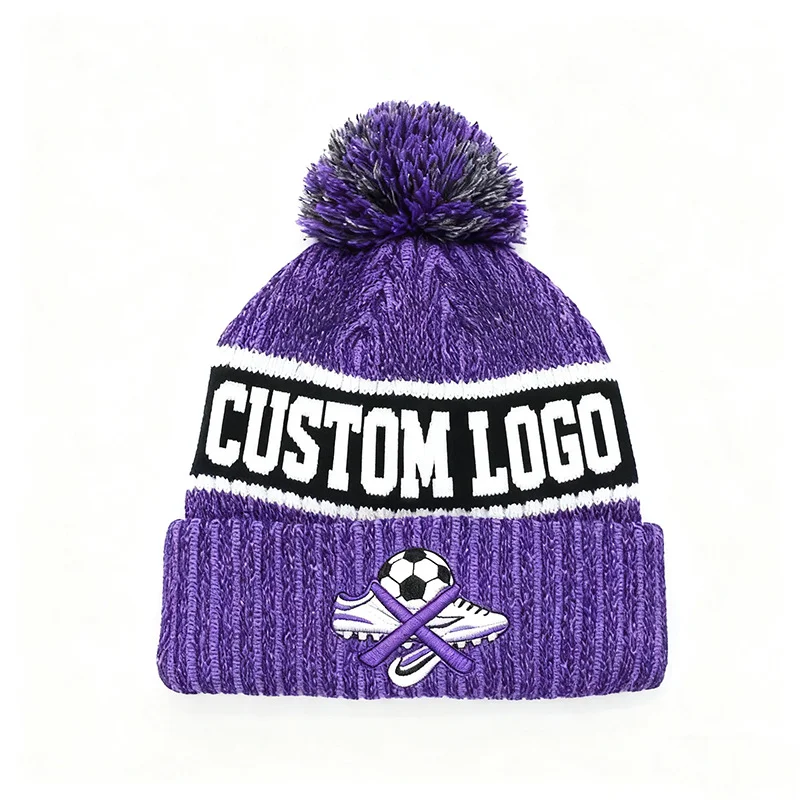
Use product references during design. A knitted football club scarf gives a different result from a woven football fan scarf. Looking at construction examples helps the buyer see what kind of logo scale, stripe width and hand feel are realistic before final proofing.
Make artwork readable
Football scarf design should be readable at real size and at stadium distance. The main club name or slogan should not depend on small outlines, narrow shadows or complex effects. If a crest contains many details, identify which parts must remain exact and which parts can be simplified. Supporters notice when a crest feels wrong, but they also notice when text becomes muddy.
Vector artwork is the best starting point. AI, EPS, SVG or production-ready PDF files let the supplier scale and adjust shapes without quality loss. If the buyer only has PNG or JPG artwork, the supplier may need to redraw the logo. That redraw should be approved before sampling, especially for licensed clubs or sponsor marks.
Text needs special discipline. Avoid long phrases in tiny type. Use fewer words and stronger hierarchy. If sponsor text must appear, decide whether it belongs in an end panel, a central panel, a repeat pattern or the reverse side. If every brand requests equal size, the scarf may lose supporter appeal. A good design protects the club identity first while still meeting commercial obligations.
Color, size and fringe decisions
Color control is a production decision. Screen color is not enough. Buyers should provide Pantone references, yarn references or physical samples when club colors are strict. The supplier should confirm whether yarn colors are available or whether a close match is required. If a club has a famous red, blue or green, do not leave matching until after sample production.
Size also affects design. A standard football scarf is often around 140 to 150 cm long and 18 to 20 cm wide, but custom dimensions are possible. Larger scarves can create stronger stadium impact but may increase yarn use, carton volume and freight cost. Smaller scarves may reduce cost but limit text length and sponsor placement. The design should be checked at actual dimensions before sample approval.
Fringe color is often underestimated. Fringe can extend the color story, create contrast or help match home and away layouts. If the scarf uses stripes, the fringe should be reviewed as part of the whole design, not treated as a default factory choice.
Labels and packing
For club shops and retailers, labels and packing are part of the design system. Woven labels, care labels, hang tags, barcodes, size labels, individual polybags and carton marks should be planned before sampling. If the scarf body is approved first and labels arrive later, the supplier may need another approval round. That can delay production.
Retail packing should match the sales channel. A club shop may need a hang tag and barcode. Ecommerce fulfillment may need polybags and SKU labels. Event handouts may need simple carton organization for fast distribution. Distributor orders may need carton marks by design, colorway or destination. These choices affect labor, cost and inspection, so they belong in the initial brief.
Care labeling and fiber descriptions should be checked against the destination market. B2B buyers should not rely on generic claims. If the order needs OEKO-TEX related material support or BSCI documentation, confirm the scope before purchase order approval.
Sample approval
The sample is where design becomes a production standard. A buyer should check logo readability, yarn shade, scarf length, width, weight, fringe, label placement, hand feel and packing method. Do not approve only a beautiful close-up photo if the order is commercially important. Ask for the measurements and review the scarf as a product, not only as artwork.
If the buyer cannot receive a physical sample because the deadline is tight, the approval process should still be disciplined. Use detailed photos, video, measurements and a written production standard. Confirm which file version is approved. Confirm whether the sample photo represents final yarn, final labels and final packing.
Once approved, the sample should be stored as the reference for bulk production and future reorders. For repeat club programs, this saves time in the next season because the supplier can match the same scarf standard instead of starting again.
Common design mistakes to avoid
The most common mistake is trying to place too much information on one scarf. A club crest, sponsor logo, player name, fixture date, long slogan, hashtag and event badge may all be important, but they cannot all have the same visual priority. A scarf is long and narrow, so the best design usually uses fewer messages with clearer hierarchy.
The second mistake is designing only for a front-facing mockup. Supporters fold scarves, hold them above their heads, wear them around the neck and photograph them from distance. Check how the scarf reads when folded, when the fringe is visible and when only one end panel appears in a product photo. If the design only works as a flat rectangle, it may fail in real use.
The third mistake is treating packaging as separate from design. For retail orders, the hang tag, care label and barcode are part of the customer-facing presentation. If the label blocks artwork, sits in the wrong position or uses a different brand language, the scarf feels less professional even when the body design is strong.
Design handoff files
A clean handoff should include the editable artwork file, exported PDF proof, color references, logo usage notes, scarf dimensions, side-by-side front and back layouts if relevant, label artwork, packing notes and any deadline that affects production. If the buyer has several approval owners, include their final sign-off in writing so the supplier is not caught between different instructions.
For repeat programs, store the approved files after shipment. The next reorder should reference the approved scarf, not start from a screenshot or an old email attachment. Good file discipline makes the second order faster, reduces color drift and helps the club maintain consistent merchandise across seasons.
Design checklist
- Define use case: retail, supporter group, event, sponsor campaign or distributor program.
- Choose construction: jacquard, knitted, woven, printed or double-sided.
- Send vector artwork and color references where possible.
- Decide which crest details and sponsor marks are non-negotiable.
- Confirm scarf size, fringe colors and whether both sides need artwork.
- Plan labels, hang tags, barcodes, polybags and carton marks early.
- Approve sample standard before bulk production.
Final recommendation
A strong football scarf design is clear, manufacturable and repeatable. It respects club identity, gives supporters a product they want to use, and gives the supplier enough technical detail to produce the order consistently. Start with use case, choose construction early, simplify artwork where needed, and treat sample approval as the bridge between design and bulk manufacturing.
Data Snapshot
Created 2026-06-29 as a 1500+ word B2B design guide supporting custom football scarf commercial landing pages. Approximate body length after HTML cleanup: 1585 words.
Frequently Asked Questions
What artwork file is best for custom football scarf design?
Vector files such as AI, EPS, SVG or production-ready PDF are best. PNG or JPG files can be reviewed, but they may need redrawing before sampling.
Should I design the scarf before choosing knitted or printed production?
Choose the production method early. Jacquard and knitted scarves need bolder artwork, while printed scarves can handle photos, gradients and finer detail.
What should be approved on a scarf sample?
Approve logo readability, color, size, fringe, hand feel, labels, packing method and carton instructions before bulk production.
Start Your Football Scarf Project
Send your crest, scarf layout, colors, quantity and deadline for a manufacturable football scarf design review.
Data verified as of 2026-06-29. MOQ, lead time, compliance scopes and production details should be checked against current order requirements before purchase order confirmation.