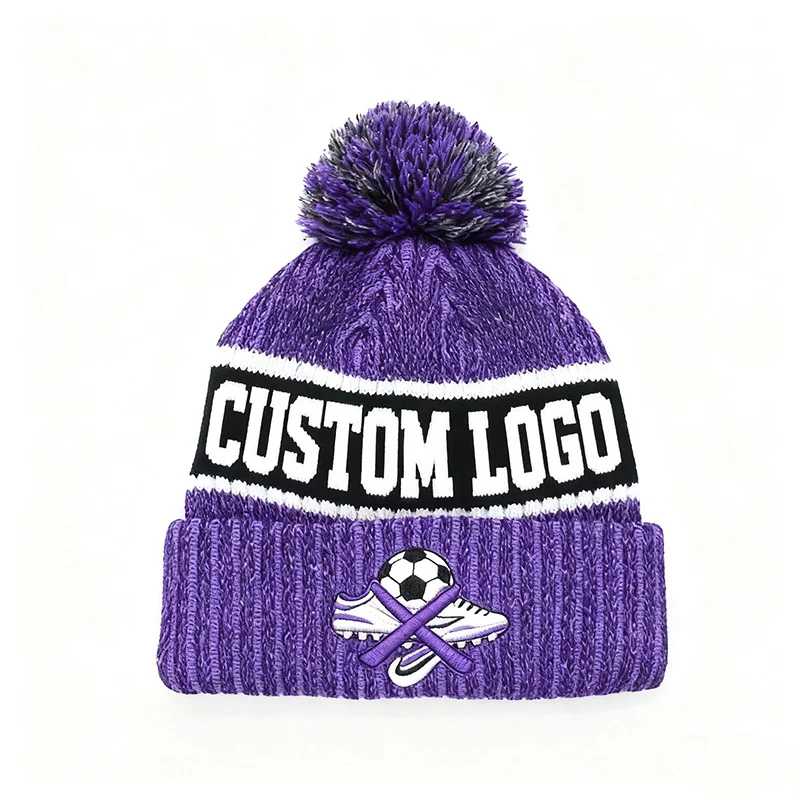
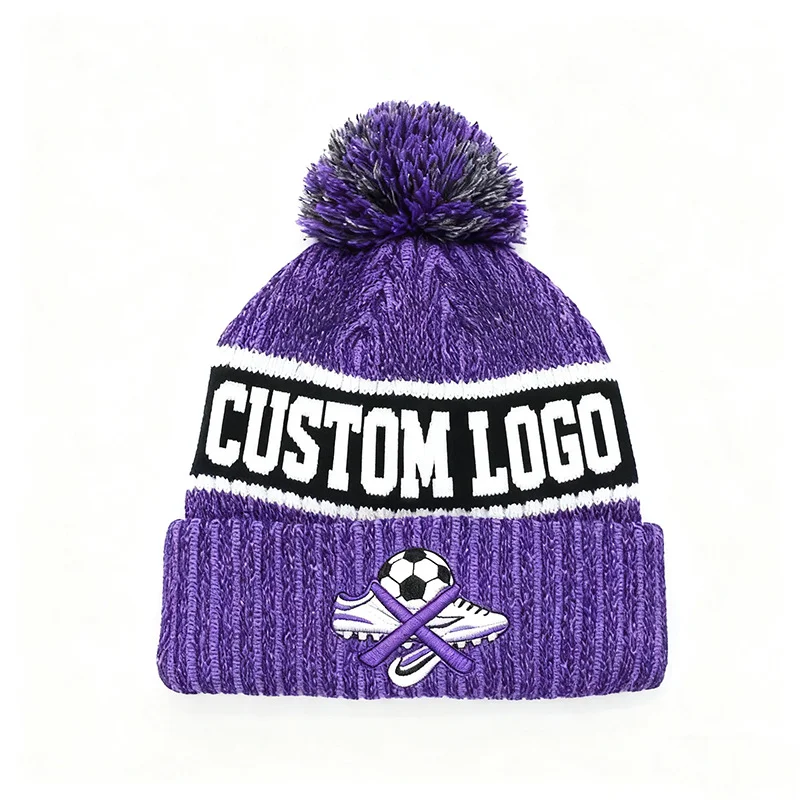
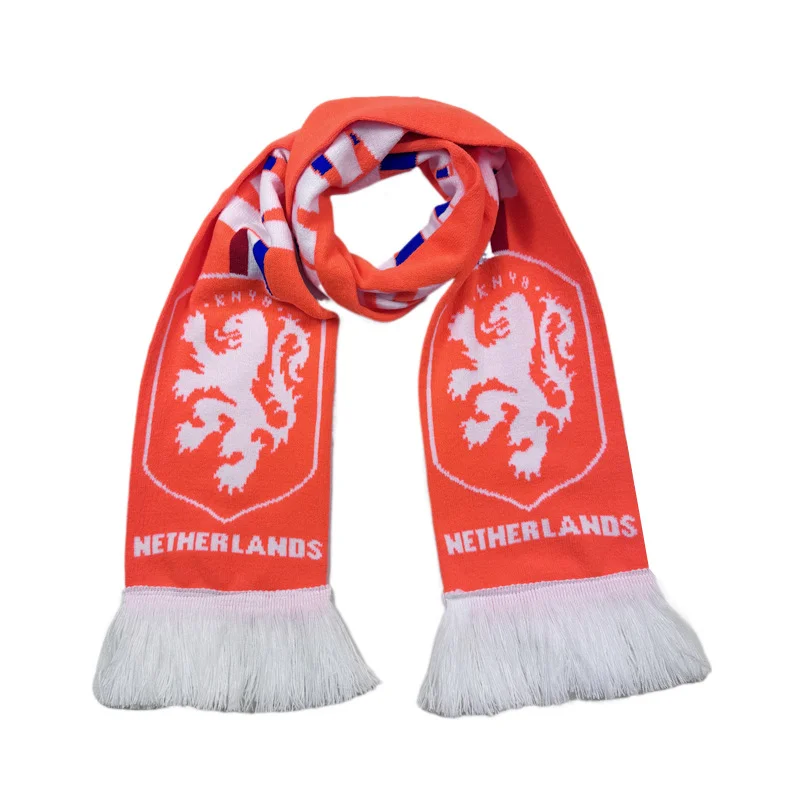
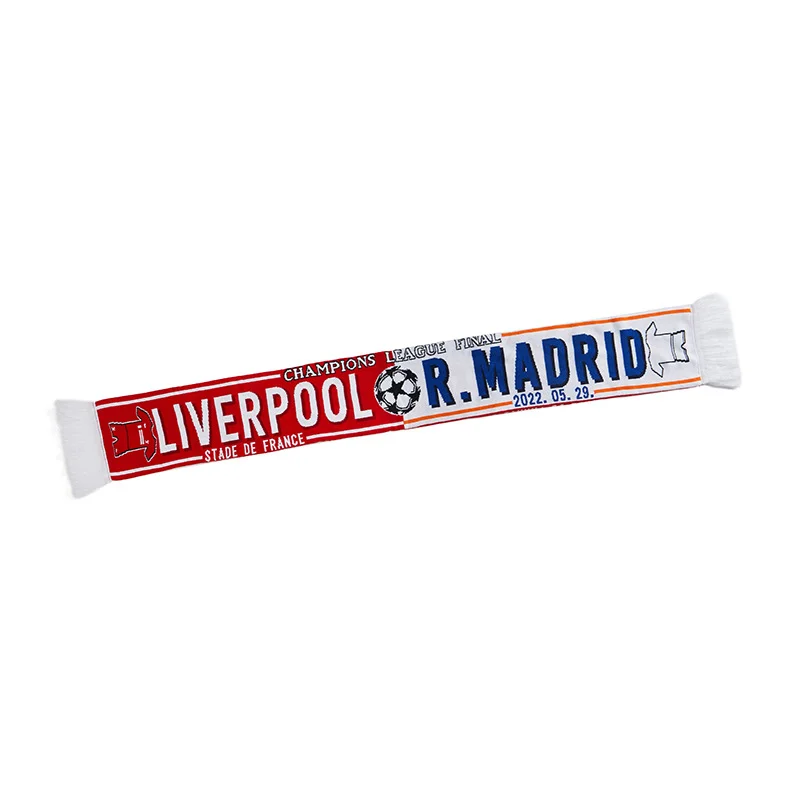
Custom Football Scarves No Minimum vs Bulk Manufacturing
Buyer Decision Summary
No-minimum custom football scarves can help a buyer test a concept, but they rarely match the price control, label options, QC scope and repeatability needed by clubs, retailers and distributors. For B2B buyers, the safer route is usually a sample or small trial review followed by a defined bulk MOQ and approved production standard.
Search demand around "custom football scarves no minimum" looks attractive because it sounds easy: upload a crest, order one scarf, and avoid commitment. That logic works for a personal gift or a rough visual test. It does not always work for a club shop, fan merchandise program, sponsor campaign or distributor order. B2B buyers need a scarf that can be approved, repeated, inspected, packed and delivered under a schedule. That is a different job from one-piece personalization.
This article compares no-minimum ordering with bulk manufacturing so clubs, retailers, supporter groups and procurement teams can decide where each route belongs. It also explains why custom football scarves should usually be planned as a production program, not only as a design upload.
Decision summary
If the buyer wants one scarf for a fan gift, no-minimum personalization can be acceptable. If the buyer needs 300, 500, 1,000 or more scarves for a shop, match, sponsor event or ecommerce launch, no-minimum logic becomes weak. The buyer is no longer testing a picture. The buyer is managing artwork translation, yarn colors, logo readability, labeling, packing, delivery and repeat supply.
The strongest B2B route is usually not "no minimum." It is "low-risk approval before bulk." That means the supplier reviews artwork, prepares a proof, confirms whether jacquard, knitted, woven or printed construction fits the design, and then produces a sample or pre-production standard before bulk manufacturing. The buyer still controls risk, but the order is built for repeatable output.
What no minimum really solves
No-minimum custom scarf services solve three narrow problems. First, they reduce upfront commitment for a private buyer. Second, they let a designer see a rough layout without negotiating a full production order. Third, they can be useful for a one-off presentation sample when the buyer only needs a visual prop.
Those benefits are real, but they are limited. A no-minimum scarf may be produced with a different method, different yarn, different packing and different inspection standard from the final bulk order. If the buyer approves that scarf as if it were a factory production sample, the team may make the wrong decision. A one-piece output does not automatically prove that a 500-piece or 2,000-piece run will match the same color, weight, label position and carton requirements.
No-minimum also does not answer commercial questions. It does not confirm whether a club shop barcode label can be applied. It does not show how cartons will be marked for a distributor. It does not settle how many units fit per carton, how much the shipment weighs, whether the packaging is retail-ready, or whether a reorder can match the first delivery. Those issues become visible only when the supplier treats the scarf as a wholesale product.
Where no minimum breaks down
The first breakdown is price. A one-piece or very small order has to absorb artwork handling, machine setup, picking, packing and administration across almost no volume. The unit price may be acceptable for a gift but misleading for a merchandise buyer. A club buyer who builds a retail margin from one-piece pricing may reject a viable product too early or compare suppliers on numbers that do not belong to the same production model.
The second breakdown is customization depth. Serious orders often need woven labels, care labels, hang tags, polybags, barcode stickers, SKU separation and carton marks. These details are not decoration; they are operational requirements for retail intake, warehouse handling and repeat sales. A no-minimum platform may not support those details, or it may support them only at a cost that makes no sense for a larger program.
The third breakdown is quality control. Bulk football scarves need checks for length, width, stitch density, yarn shade, logo clarity, fringe trimming, label placement, packing count and carton accuracy. For a sponsor or club shop order, the failure is not only a bad scarf. It can be a late launch, a rejected delivery, a sponsor complaint or a supporter-facing brand issue.
Why bulk MOQ exists
MOQ is not only a factory barrier. In custom scarf manufacturing, MOQ pays for setup work that must happen before the first clean bulk unit is produced. Artwork must be converted into a production-ready file. Yarn colors may need matching. The scarf size, fringe, label and packing method must be confirmed. A sample needs review. Bulk production must be scheduled and inspected.
For football scarf suppliers, a 500-piece MOQ is often a practical line where the order can support these fixed steps without forcing the unit price into unrealistic territory. The exact threshold may change by design complexity, material, color count, packaging and delivery pressure. A simple two-color scarf can behave differently from a double-sided sponsor scarf with several labels and split cartons.
The point is not that every buyer must order the same quantity. The point is that a B2B buyer should understand what the MOQ is funding: production planning, approval discipline, repeatability and QC. A supplier that explains MOQ clearly is often safer than a supplier that promises no minimum but cannot explain how the final order will be controlled.
B2B comparison table
| Decision area | No-minimum route | Bulk manufacturing route |
|---|---|---|
| Best use | Personal gift, concept visual, very small test | Club shop, event, distributor, supporter group, retail order |
| Artwork review | Often upload-based | Factory checks logo scale, yarn limits and color references |
| Unit cost | High and not useful for wholesale margin | Built around quantity tiers and setup absorption |
| Labels and packing | Limited or expensive | Can include woven labels, hang tags, barcodes, polybags and carton marks |
| Quality control | Focused on single item output | Checks bulk consistency, packing count and shipment readiness |
| Reorder value | Weak unless production files are controlled | Approved sample and files can support future seasons |
Recommended route for B2B buyers
For B2B buyers, the better question is not "Can I order with no minimum?" The better question is "How do we reduce risk before committing to bulk?" A serious supplier should offer a clear approval path: artwork review, digital proof, method recommendation, sample or pre-production approval, bulk production, inspection and packing.
If the buyer is nervous about demand, the order can be simplified instead of forcing true no-minimum manufacturing. Use fewer colors, standard scarf dimensions, basic packaging and one approved design. Avoid splitting the first order into too many variants. Keep the artwork bold enough for jacquard football scarf or knit construction. If a detailed sponsor design is required, compare printed production before asking the factory to force every detail into yarn.
For club shops, a small controlled bulk order is usually safer than a no-minimum product that cannot be repeated. The buyer should approve a sample, document yarn colors, confirm label placement, store artwork files and record packing instructions. That creates a standard the supplier can reproduce for reorders.
This approach also gives the buying team a stronger internal argument. Instead of saying the supplier refuses no minimum, the buyer can explain that the order needs a production standard: approved artwork, confirmed yarn colors, retail label files, packing instructions and inspection points. That language moves the discussion away from a simple quantity objection and toward operational reliability.
For first-time club buyers, a sample plus a defined MOQ is often easier to defend than a cheap one-piece result. The sample proves whether the scarf can represent the club properly. The MOQ explains what quantity is needed for repeatable manufacturing. Together, they create a practical bridge between design enthusiasm and commercial delivery.
Supplier questions before order approval
Before choosing a no-minimum or bulk route, ask the supplier what production method will be used for the final order, whether the sample uses the same construction, how color matching is handled, what the MOQ covers, whether labels and retail packing are included, and which QC photos or reports are available before shipment.
Also ask whether each design, colorway or sponsor version has a separate minimum. A buyer may think a 1,000-piece order is one program, while production may treat it as five 200-piece designs. That difference changes cost, setup, carton planning and inspection. It is better to find out before the quote is accepted.
If a supplier promotes no minimum, ask exactly what customization remains available at that level. Can the scarf use the same yarn as bulk production? Can it include the same label and packing? Can a later bulk order match the first piece? Can the supplier provide the same QC standard for a 500-piece run? If the answers are vague, the no-minimum offer is probably a retail service, not a B2B manufacturing route.
Final recommendation
Do not build a serious football scarf program around no-minimum language alone. Use no-minimum services only for personal gifts or very early concept checks. For clubs, retailers, distributors and event buyers, use a B2B manufacturing process with realistic MOQ, proofing, sample approval, QC and packing control. That is the route most likely to produce a scarf that can be sold, handed out, reordered and defended inside a buying team.
Data Snapshot
Created 2026-06-29 as a B2B comparison article to route no-minimum search intent toward sample approval, MOQ planning and bulk football scarf manufacturing instead of a standalone no-minimum landing page. Approximate body length after HTML cleanup: 1519 words.
Frequently Asked Questions
Should B2B buyers choose no-minimum custom football scarves?
Usually no. No-minimum can help with personal gifts or early concept tests, but B2B buyers normally need sample approval, labels, packing, QC and repeatable bulk production.
What is a better alternative to no minimum?
Use a low-risk approval path: artwork review, proof, sample or pre-production approval, then bulk manufacturing under a clear MOQ and QC standard.
Why does MOQ matter for custom football scarves?
MOQ helps cover artwork conversion, yarn setup, sampling, production planning, inspection and packing work that cannot be spread efficiently across one or two units.
Start Your Football Scarf Project
Send your artwork, quantity target and delivery date to compare a realistic bulk manufacturing route for custom football scarves.
Data verified as of 2026-06-29. MOQ, lead time, compliance scopes and production details should be checked against current order requirements before purchase order confirmation.